 |
In an era of rapid technological development, engineering is increasingly asked to solve a complex dual challenge: preserving the past while enabling the future. For heritage buildings, this balance becomes even more delicate. In this interview, Professor David Oloke discusses how digital technologies—especially digital twins—are reshaping the way we understand, preserve, and adapt historic structures for modern use. |
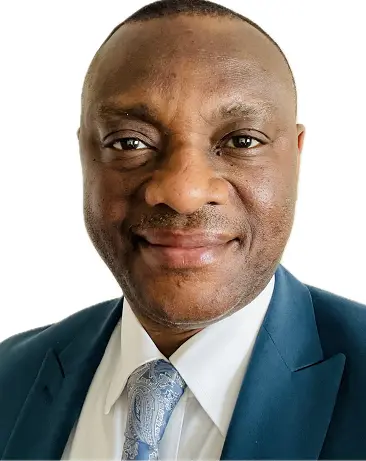
| Professor of Civil Engineering, Head of School of Engineering and the Built Environment, Anglia Ruskin University, UK |
Why is renovating a heritage building particularly challenging in today’s technological era?
Heritage buildings are unique because they must be preserved while still aging like any other structure. Many of them are extremely old, which makes interventions more complex and requires extra care.
The challenge is to preserve historical value while adapting these buildings to modern needs. With today’s technology, however, we have new opportunities to explore better and safer ways of upgrading them.
How do digital twins ensure safe and sustainable adaptation compared to traditional methods?
Traditional methods often rely on assumptions, because we do not always fully understand how historical buildings were originally constructed or how they will respond to change.
Digital twins allow us to overcome this uncertainty. By modeling the building virtually—based on material properties and available data—we can simulate different interventions and observe how the structure would respond. This provides much more reliable guidance for real-world renovation.
Even after refurbishment, the digital twin can continue to monitor the building’s performance using sensors, providing continuous, real-time feedback.
What is more challenging: preserving history or introducing new functions? How can these be balanced?
Preserving history is extremely challenging because, in many cases, there is very limited documentation—sometimes none at all. We must therefore rely on experience and comparable examples to understand the building.
At the same time, modern technology is naturally better suited for new structures than historical ones, so it often needs to be adapted. Balancing these two aspects requires expertise and experience in managing risk and uncertainty.
Can historic buildings realistically be adapted for modern use?
Yes, but it can be costly. Many heritage buildings were not designed with modern requirements, such as thermal efficiency or airtightness, in mind. Upgrading them can therefore require significant investment.
However, their structural quality is often exceptional. Many were built with durable materials that can last for centuries. This makes the long-term investment worthwhile, as these buildings can continue to serve future generations if properly maintained and upgraded.
What motivated you to accept our invitation to the conference, and how do you see future collaboration between the two universities?
The theme of the conference was very appealing and broad in scope, which made it especially interesting for me to contribute. It also provided a valuable opportunity to learn from others working in different areas.
I believe there is a strong opportunity to develop multidisciplinary research, which is increasingly a key focus for funding bodies. Today’s most relevant projects are those that combine different fields, perspectives, and expertise rather than treating them separately.
This conference already reflects a multidimensional approach in which engineering, human aspects, Lean thinking, and digital innovation naturally intersect. This creates clear potential for future collaboration.
The real challenge—and opportunity—is to integrate and harmonize these different perspectives within larger research projects, where technical, human, and organizational aspects can be developed together coherently.
Cs.K.